THE BASIC IDEA
What is a folding knife?
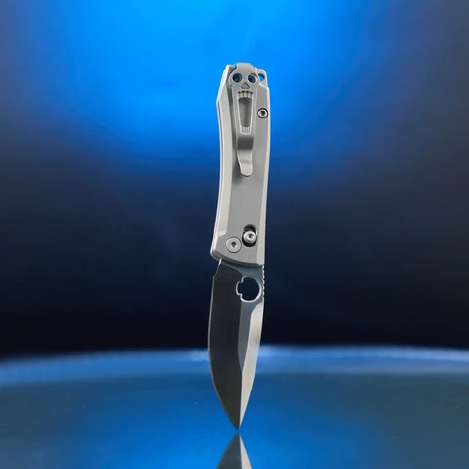
A folding knife stores its blade inside the handle when closed. That compact format is why folders are so closely associated with pocket carry and EDC.
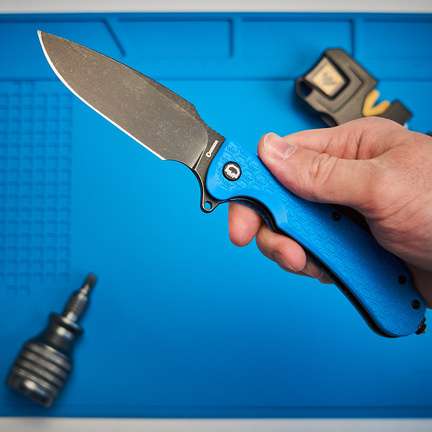
Everything after that is a design decision. Some folding knives are deliberately small and light. Others use a full-size blade and a substantial handle. Some lock open; others rely on spring tension. Some open with a flipper, thumb stud or blade hole. The useful question is not whether one system is universally “best,” but which combination fits the work and carry you actually have.
HOW THE BLADE STAYS OPEN
Three lock styles you will see on Daggerr folders.
A spring-like liner moves behind the blade when the knife opens. It is simple, widely understood and works well in slim folding designs.
Part of the handle frame itself moves behind the blade. The concept is related to a liner lock, but the locking element is part of the structural handle.
A sliding bar engages the blade tang from both sides of the handle. The layout is naturally ambidextrous and keeps fingers away from the blade path when the lock is released.
Good geometry, sensible construction and an opening method you can operate deliberately matter just as much as the name of the lock.
BLADE GEOMETRY
The outline changes the way a folder cuts — and the way it feels.
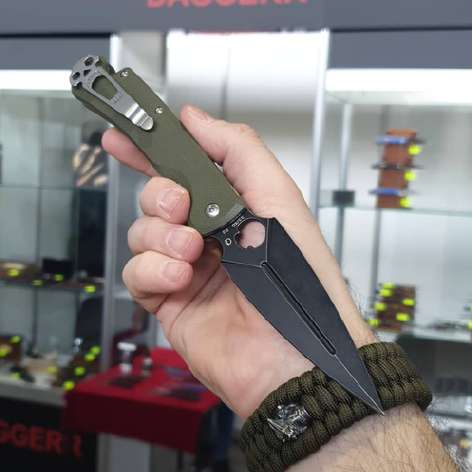
Drop points are versatile and familiar. Tanto and reverse-tanto profiles put more emphasis on an angular tip and straight cutting sections. Narrow spear- and dagger-influenced shapes create the fast visual line seen on models such as Arrow and STING / ZHALO. Cleaver-like profiles move in the other direction, adding visual and working width.
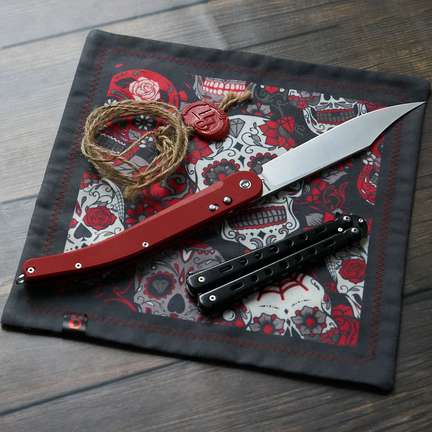
Daggerr deliberately uses very different blade shapes because an EDC knife is personal. The variety is the point: the best shape is the one that makes sense for your recurring tasks and that you actually want to carry.
STEEL & HANDLE
Materials should match the job — and the budget.
Daggerr folders range from practical steels such as 8Cr14MoV and D2 through VG10 and premium CPM MagnaCut. Handle choices range from lightweight FRN and grippy G10 to carbon fiber and titanium. Each change affects weight, feel, maintenance, price and the character of the knife.
There is no single material ladder that makes every more-expensive option automatically better for every user. A light FRN folder can be the right EDC; a titanium and MagnaCut folder can be the right EDC too. Start with what you need the knife to do.
Read the materials guide →EVERYDAY CARRY
When is a folding knife a good EDC choice?
A folder earns its place in EDC when the closed size, weight, clip, opening method and blade are comfortable enough that you will actually carry it. For normal cutting tasks, convenience matters. A knife left in a drawer because it is too large, awkward or precious is not doing much everyday carrying.
Always check the knife laws and carry rules that apply where you live and travel. Local restrictions can affect blade length, mechanisms, carry method and where a knife may be carried.
How to choose an EDC knife →FOUR DIFFERENT FOLDERS