
THE PRINCIPLE
History is a starting point, not a specification.
Daggerr's name already points toward dagger-like forms, so historical references have been present in the brand from the beginning. Our design process asks which proportions, gestures and recognizable details are worth keeping — and what must change for a folding knife or compact everyday tool.
That is why these models sit naturally beside contemporary EDC knives: the reference can be centuries old while the mechanism, materials, scale and intended use belong to today.
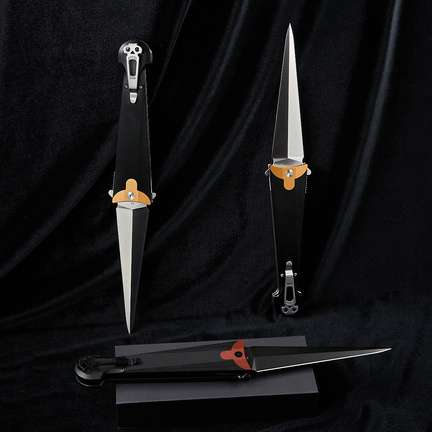
Years in the sketchbook.
The Cinquedea idea was close to Daggerr from the brand's early years. Design work was underway by 2018, with a difficult brief: preserve the proportions and recognizable “horns” associated with the historical form, while allowing the blade to disappear into a practical folding handle.
The Daggerr archive records an early 2018 Cinquedea and a later 2022 production chapter. That gap is useful context: adapting an old form to an everyday knife was a development process, not a costume applied at the end.
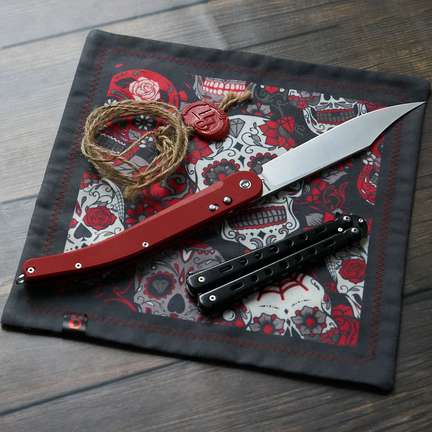
A Spanish reference, in Daggerr language.
Navaja reached the Daggerr line in 2024 after more than a year of development and prototype work. The project explored more than one blade direction before the family settled around distinct versions, including a classic form and a more assertive interpretation.
What matters to Daggerr is not recreating an old friction folder. It is carrying the sweep and visual rhythm of the historical reference into a modern mechanism, materials and brand vocabulary.
WHY IT BELONGS IN EDC
The use case is contemporary even when the inspiration is not.
Everyday carry is full of personal choices. A historically inspired shape can be part of that culture when it is redesigned around present-day scale, handling and materials. That is the line Daggerr keeps exploring across the archive.